
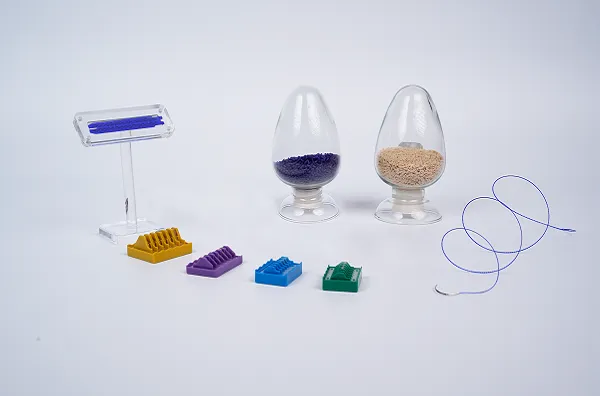
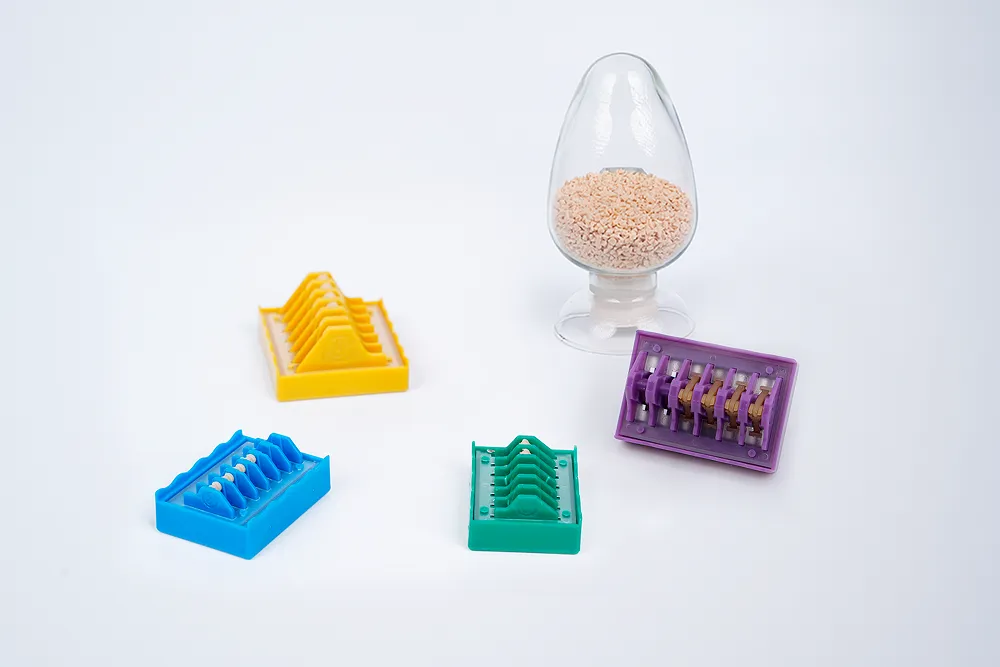
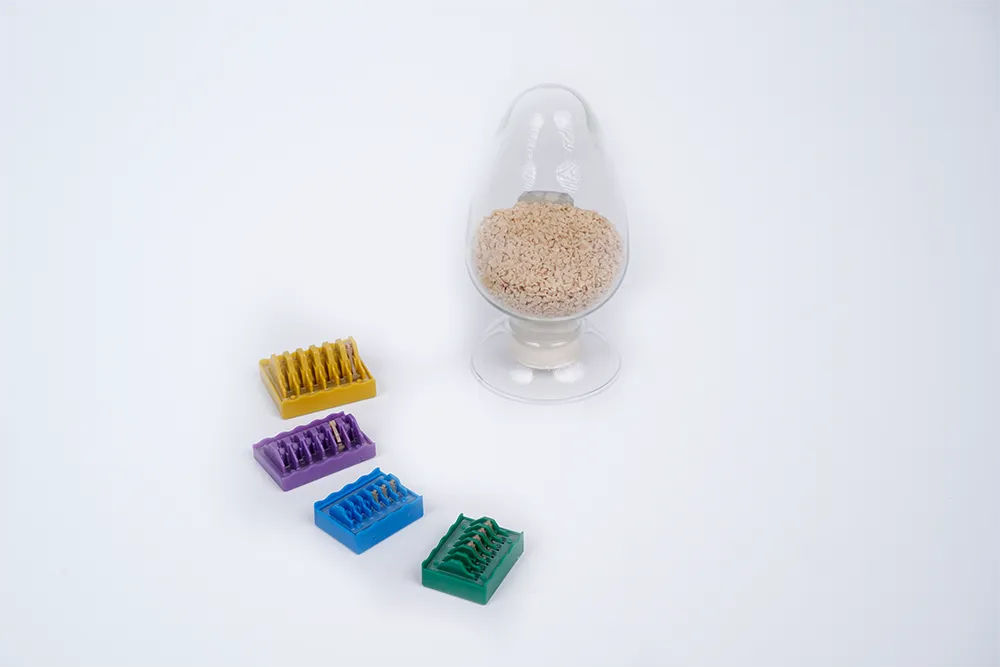
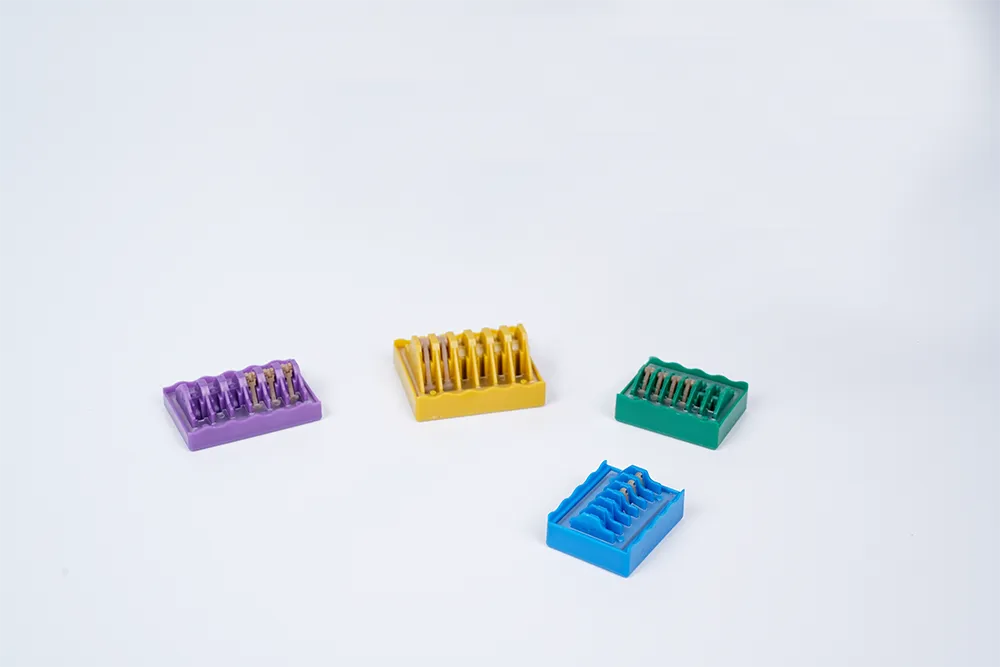
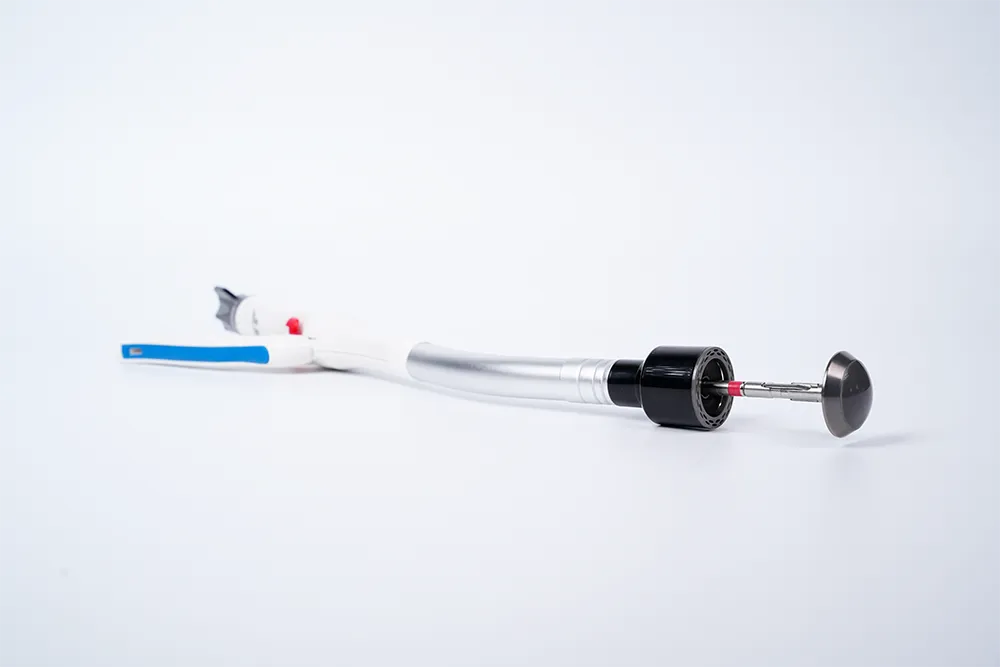
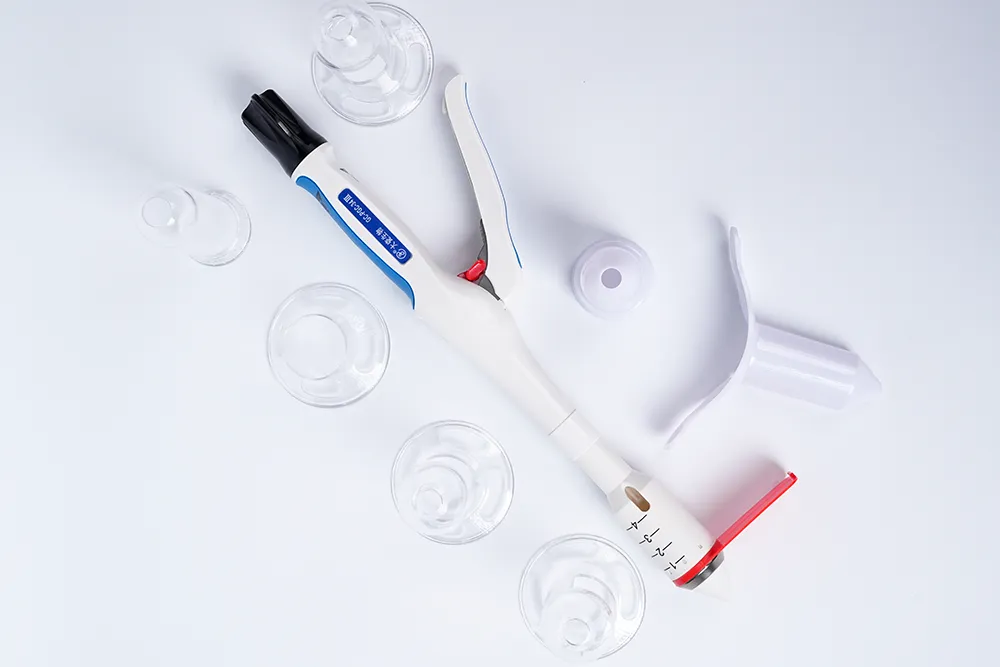
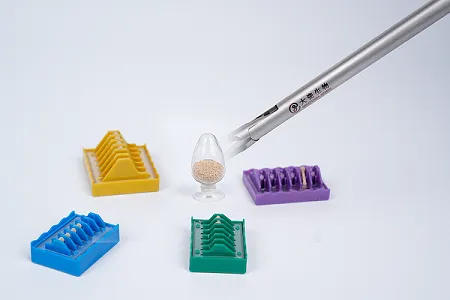
Specification of Absorbable Locking Ligation System
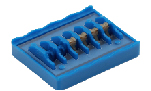
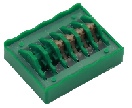
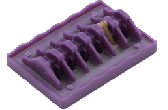
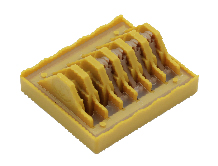
| Ligating Clip Code | Ligating Clip Base Color | Diameter of Tubular Tissue | Compatible Clip Applier Code | Clip Applier Roller Color |
| GC-BHJ-XS2 | Blue
| 0.4mm ~ 2.8mm | GC-SJQ-XS | Blue |
| GC-BHJ-XS3 | ||||
| GC-BHJ-XS4 | ||||
| GC-BHJ-XS5 | ||||
| GC-BHJ-XS2 | ||||
| GC-BHJ-S2 | Green
| 0.5mm ~ 3.3mm | GC-SJQ-S | Green |
| GC-BHJ-S3 | ||||
| GC-BHJ-S4 | ||||
| GC-BHJ-S5 | ||||
| GC-BHJ-S6 | ||||
| GC-BHJ-M2 | Purple
| 2.0mm ~ 5.1mm | GC-SJQ-M | Purple |
| GC-BHJ-M3 | ||||
| GC-BHJ-M4 | ||||
| GC-BHJ-M5 | ||||
| GC-BHJ-M6 | ||||
| GC-BHJ-L2 | Golden
| 4.0mm ~ 7.6mm | GC-SJQ-L | Golden |
| GC-BHJ-L3 | ||||
| GC-BHJ-L4 | ||||
| GC-BHJ-L5 | ||||
| GC-BHJ-L6 |
Benefits of Absorbable Locking Ligation System
Material: PGLT.
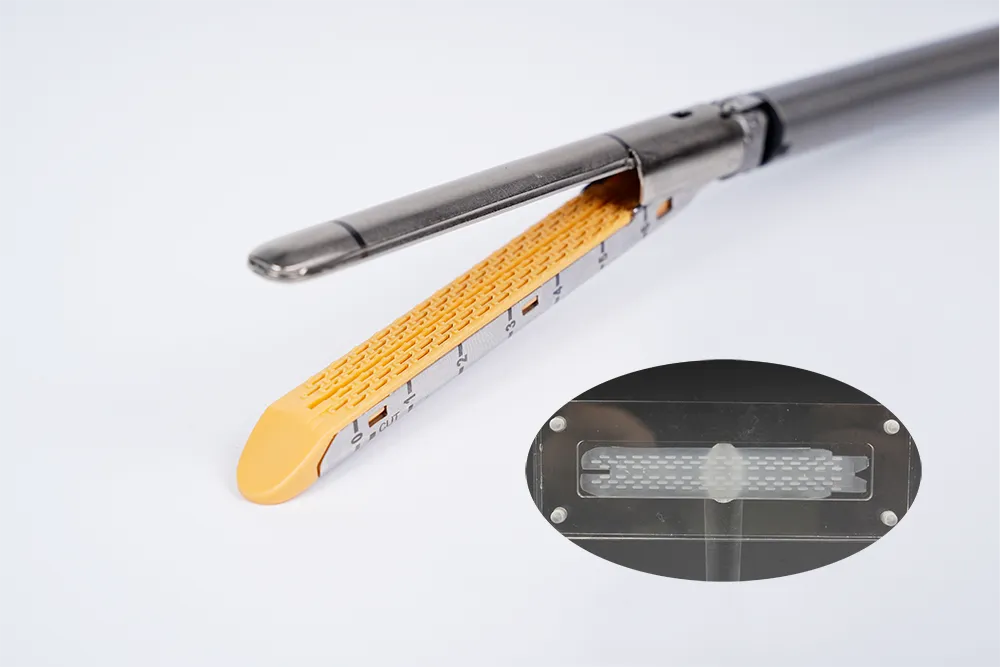
Design: Locking mechanism with dual-action jaws (rigid clip + elastic delivery system).
Degradation: Complete absorption within 12months.
Benefits:
Secure Closure: Combines penetration of polymer clips, with the absorbability that the polymer clips impossible to have.
No Migration Risk: Locking design prevents slippage in vascular/ductal ligation.
Competitive Edge:
Hybrid Performance: Matches non-absorbable clip strength while eliminating long-term foreign body risks.
Patented Innovation: Patented novel hinge structure to ensures reliability.
Competitive Comparison Table
| Feature | GClipX | AbsorbaClips | Polymer Clip | Chinese Mg Clips |
| Absorbable | ✅ Yes (12mo) | ✅ Yes (12mo) | ❌ No | ✅ Yes (12-24mo) |
| Clamping Force | ✅ 8-12N | ❌ 5-8N | ✅ 10-15N | ❌ 4-6N |
| Locking Mechanism | ✅ Hinge Lock | ❌ Friction | ✅ Mechanical Lock | ❌ No locking |
| Long-term Safety | ✅ No residues | ✅ Yes | ❌ Permanent foreign body | ❌ Slow degradation |
| Tissue Penetration | ✅ | ❌ | ✅ | ❌ |
FAQ
What are absorbable closure clips and what is their intended purpose in surgery?
Absorbable closure clips are small implantable devices made from absorbable polymers that ligate blood vessels, seal tubular structures, or approximate tissue during surgery. They provide rapid hemostasis similar to metallic clips but are completely resorbed, avoiding imaging interference on CT or MRI. Available in various sizes.
How do absorbable ligating clips compare to traditional ligation methods?
Absorbable ligating clips offer distinct advantages over alternatives: vs metallic clips they are resorbable and radiolucent with no imaging artifact; vs suture ligation they enable faster application without knot tying; vs energy-based sealing they provide a purely mechanical seal with no thermal spread. The choice depends on vessel size, surgical approach, and imaging needs. Absorbable clips minimize permanent foreign material in the body.
In which surgical specialties are absorbable surgical clips most commonly applied?
Absorbable surgical clips are commonly used in general surgery for laparoscopic cholecystectomy and colorectal mesenteric vessel ligation; gynecologic surgery for hysterectomy; urologic surgery for nephrectomy and radical prostatectomy; thoracic surgery for VATS vessel securing; hepatobiliary surgery for liver resection; and pediatric surgery where no permanent material remains as the child grows. Their radiolucency benefits oncology surveillance imaging
What are the material properties and absorption characteristics of modern absorbable ligating clips?
Modern absorbable ligating clips are made from polyglycolide-based copolymers, polydioxanone, or glycolide-trimethylene carbonate copolymers with well-characterized safety profiles. Absorption occurs through hydrolysis: the first 2-6 weeks maintain polymer integrity while the vessel heals, followed by gradual mass loss over months to over a year. Sophisticated latching mechanisms provide secure closure with consistent compressive force without necrosis.
What factors should surgical teams consider when selecting absorbable surgical clips?
Selection of absorbable surgical clips requires matching clip size to vessel diameter, ensuring sufficient closure force for hemostasis under arterial pressure with secure latching, matching absorption timeline to vessel healing of 2-6 weeks, verifying laparoscopic compatibility with port sizes, and considering radiolucency needs for CT or MRI surveillance. The higher cost versus metallic clips should be weighed against these imaging and safety benefits.
What should surgeons and hospitals compare when evaluating a new ligation clip system?
A useful comparison goes beyond clip price. Evaluators should examine the closure mechanism, vessel or duct range, resistance to slippage, consistency of clip formation, applier ergonomics, tactile or audible feedback, loading steps, and the system's behavior in wet or fatty tissue. They should also consider sterilization, packaging, shelf life, training requirements, complaint handling, and the supplier's ability to provide traceability. For absorbable clips, the degradation profile and retention of functional strength during healing are additional questions. The best evaluation is usually procedure-specific and includes bench data, usability review, and controlled clinical introduction rather than a broad claim that one clip is suitable for every case.
What is the clinical rationale for using an absorbable ligation clip?
The clinical rationale is to provide secure vessel or duct closure throughout the critical healing period and then gradually be absorbed after its function is no longer required. This approach may help reduce the long-term presence of foreign material in the body and may be particularly relevant when future imaging, reoperation, patient age, or long-term implant burden is a consideration.
The development of absorbable ligation clips reflects an important direction in surgical innovation: moving toward procedures that achieve effective closure during healing while minimizing permanent foreign-material residue in the body. Although current absorbable solutions may not yet meet every ligation need within a procedure, continued advances in materials, designs, and size ranges may expand their clinical applications. The long-term goal is to enable more surgical procedures to be completed without leaving unnecessary permanent foreign material in the patient—an aspiration that continues to drive technological innovation in absorbable medical devices.
Do absorbable clips eliminate the need to think about imaging artifacts?
They may reduce long-term concerns related to retained radiopaque material, but imaging effects depend on the specific material, stage of degradation, imaging modality, and product design. It is not accurate to assume that every absorbable device becomes immediately invisible or that every permanent polymer clip creates a major artifact. When postoperative imaging is important, teams should review product-specific information and discuss it with radiology and surgical stakeholders. The broader point is that implant visibility should be considered during device selection, especially in patients who may undergo repeated surveillance imaging.
What are the most common reasons a ligation clip may not perform as intended?
Potential problems include selecting the wrong clip size, capturing too much or too little tissue, placing the clip too close to the cut edge, incomplete lock engagement, contamination in the applier jaws, misalignment, or using the device outside its intended indication. Tissue can also be unusually thick, calcified, inflamed, or under tension. Prevention begins with correct sizing, full visualization, clean instruments, controlled placement, and confirmation that the closure cycle is complete. If a clip looks malformed or uncertain, the team should follow the product instructions and institutional protocol rather than relying on appearance alone.
Why are tactile and audible signals useful in a clip applier?
Feedback can help the user recognize key steps such as clip loading, complete jaw closure, or lock engagement without relying only on visual cues. This may be particularly useful during minimally invasive procedures, where the surgeon sees the distal jaws on a monitor but feels the handle response directly. Feedback is not a guarantee of correct placement, however. The tissue must still be fully visualized, the correct size chosen, and the final clip inspected. A good usability assessment looks at whether the signals are clear, repeatable, and distinguishable from normal handle resistance.
How should a hospital introduce a new ligation clip and applier system?
A controlled introduction is usually safer than immediate hospital-wide substitution. Start with a cross-functional review involving surgeons, operating-room nurses, sterile processing, procurement, risk management, and biomedical or quality personnel as appropriate. Verify regulatory status, indications, compatible clip sizes, reprocessing requirements for reusable components, and training materials. Conduct hands-on loading and application practice, define which procedures will be included, and ensure the existing system remains available during the transition. Early cases should be monitored for usability issues and product complaints. Adoption should be based on documented performance and workflow fit, not only acquisition price.


 Call us on:
  Email Us:
  Bldg 13, No.3 Hanshan Road, Xuejia Town, Xinbei District, Changzhou, Jiangsu 213125, China