In the evolution of medical devices, some innovations may seem minor yet profoundly alter the lives of millions of patients. Hemorrhoids—a condition many are reluctant to discuss yet suffer from at an alarming rate—affect up to 50% of adults worldwide.For patients with moderate to severe hemorrhoids, PPH (Procedure for Prolapse and Hemorrhoids) was once hailed as a "minimally invasive miracle." By excising the mucosa above the hemorrhoids and stapling the wound with metal staples, it avoided the intense pain and lengthy recovery associated with traditional excision and ligation techniques.
However, reality proved far more complex than the ideal. In recent years, mounting clinical feedback and patient complaints have revealed an unsettling truth: the persistent post-operative pain did not subside. Instead, the presence of "permanent titanium staples" evolved into a new chronic torment.Patients endure years, even decades, of persistent defecation difficulties, anal stenosis, foreign body sensations, and recurrent bleeding, severely compromising their quality of life. More distressingly, these complications stemming from the device itself are quietly intensifying doctor-patient conflicts—physicians strictly follow guidelines yet patients suffer terribly; patients question efficacy while doctors find themselves in the helpless position of "no technical error, but device flaw."
The root cause of all this may lie hidden within those dozens of seemingly inert pure titanium staples.
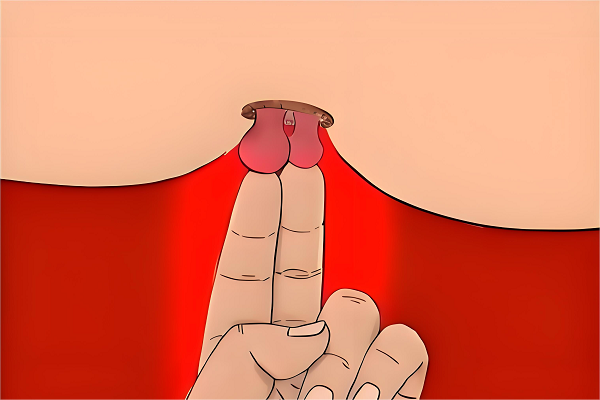
Since its introduction to clinical practice in the late 1990s, the PPH technique has rapidly gained widespread adoption due to its advantages of "preserving the anal cushions, minimizing nerve damage, and shortening hospital stays."Its core involves using a disposable stapler to perform a circular resection of the rectal mucosa above the hemorrhoids, then securing the anastomosis with dozens of micro-titanium staples. Titanium, prized for its biocompatibility, high strength, and corrosion resistance, was once considered an ideal implant material.
However, the very "permanence" of the implants proved problematic.
The human anus is a highly sensitive and dynamically changing region, enduring complex mechanical stresses and microbial challenges daily. While titanium staples are not rejected, they also cannot be absorbed. Permanently embedded like miniature "rivets" in the submucosal layer at the rectoanal junction, over time they:
Chronic inflammatory response: Despite titanium's inert properties, the prolonged presence of foreign material activates the local immune system, leading to fibrous tissue proliferation;
Causes anal stenosis: Scar contracture combined with the physical obstruction of the staples gradually narrows the anal canal diameter. Patients experience defecation like "passing through a narrow gate," often requiring manual dilation with fingers;
Increased anastomotic fragility: Uneven tissue healing around the titanium staples creates weak points, making even mild constipation or straining prone to causing anastomotic tears and bleeding;
Persistent foreign body sensation and heaviness: Particularly after prolonged sitting, exercise, or sexual activity, patients often feel "something pressing inside the anus," severely impacting psychological well-being and social interactions.
More critically, these complications often emerge gradually 3–6 months post-surgery, by which time the procedure is long concluded and accountability becomes ambiguous. Physicians cannot remove the titanium staples, leaving patients to endure them passively. Clinically, a paradox has emerged where "revision rates after PPH exceed those of traditional procedures"—a stark irony undermining the very purpose of "minimally invasive" surgery.
Faced with this predicament, frontline colorectal surgeons feel profoundly helpless. It's not that they are unwilling to provide better treatment, but rather that existing instrument options are severely limited. Nearly all mainstream staplers on the market currently use titanium staples. Even when aware of their long-term risks, there are no viable alternatives. Surgeons often find themselves in a dilemma:
"Using PPH risks causing patients long-term suffering; not using PPH fails to meet patients' expectations for 'minimally invasive' care."
Patients' demands are even more direct: "I just want to cure my hemorrhoids—not live with metal staples forever."
This supply-demand mismatch fundamentally reflects materials science lagging behind clinical needs. Medicine has progressively entered the "absorbable era"—from sutures to bone pins, from stents to hemostatic materials, biodegradable polymers have proven their safety and functionality across multiple fields. Yet in the high-stress, high-infection, high-risk field of anorectal stapling, developing absorbable staples remains exceptionally challenging.
The reason lies in the anal environment's extreme demands. It requires materials not only to degrade safely within the patient post-surgery but also to maintain sufficient strength during the critical healing period (typically 2–3 weeks), providing adequate time for tissue repair while withstanding defecation pressure. Simultaneously, degradation products must be non-toxic, non-inflammatory, and degrade at a rate synchronized with tissue regeneration. This poses immense challenges for material formulation, structural design, and sterilization processes.
Consequently, the industry has long stagnated within the "comfort zone" of titanium staples. However, Greatchina Biomed's R&D team is poised to break this impasse through innovative research.
Since its inception, Greatchina Biomed has pursued a clear vision: to eliminate implants as lifelong burdens for patients. The company focuses on the technical pathway of achieving absorbability for non-permanent implants, dedicated to resolving biomaterial-centered infections (BCI) and foreign body-related complications through deep integration of materials science and clinical needs.
After thoroughly examining numerous adverse events following PPH procedures and listening to patient feedback, the Greatchina Biomed team realized that innovation in hemorrhoid staplers lies not in the blade or handle, but in those dozens of tiny staples.
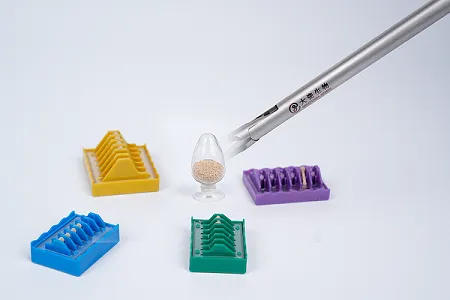
Thus, a multidisciplinary team comprising polymer material experts, biomechanical engineers, and clinical specialists launched the "Absorbable Hemorrhoid Stapler" project. Their objective was not merely material substitution, but to reconstruct the performance logic of the entire stapling system:
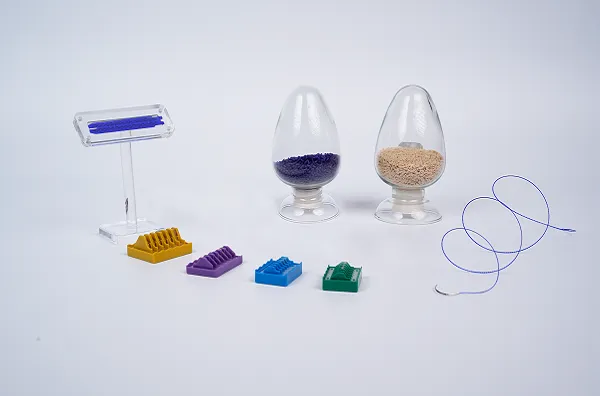
Material Selection: Utilizing Greatchina Biomed's proprietary absorbable copolymer material, engineered through molecular weight and soft segment regulation to ensure initial strength meets clinical demands and supports the critical healing phase.
Precision Degradation Timing: Designed a gradient degradation curve—maintaining over 90% strength for the first 3 weeks, then gradually degrading into harmless natural metabolites like lactic acid and glycolic acid between weeks 4–8. These intermediates are further metabolized into carbon dioxide (CO₂) and water (H₂O) through bodily pathways, excreted, with complete absorption controlled within 52 weeks;
Optimized staple body structure: Based on anorectal biomechanical modeling, redesigned staple leg angles and closure profiles ensure uniform tension distribution across anastomoses, minimizing localized stress concentration.
More importantly, Greatchina Biomed adheres to a "clinically driven R&D" philosophy. Following prototype development, animal model validation and clinical trials proceeded concurrently, with frontline colorectal surgeons invited to participate in multiple rounds of simulated surgeries and iterative feedback.
When this next-generation hemorrhoid stapler featuring fully synthetic absorbable staples entered the market, it brought not only technological advancement but a paradigm shift in clinical practice.
For patients:
Within 12 months post-surgery, the staples gradually degrade, completely eliminating foreign body sensation and long-term stenosis risks;
Anastomotic healing becomes more natural, accelerating bowel function recovery, significantly reducing dietary restrictions, and enhancing quality of life;
The probability of secondary surgery is significantly reduced, truly achieving "one procedure, lasting peace of mind."
For physicians:
Eliminates ethical and legal concerns associated with "titanium staple complications," rebuilding patient trust;
No need to alter surgical habits, with a gentle learning curve and easy adoption;
Offering more patient-centered treatment options enhances department reputation and patient satisfaction.
For the entire industry, Greatchina Biomed's breakthrough signifies that anorectal staplers have finally transitioned from the "metal era" to the "absorbable era." It not only resolves historical issues with PPH technology but also establishes a new device philosophy: "temporary support, timely withdrawal." The purpose of implants is to assist healing, not to remain permanently.
The ultimate purpose of medicine has never been to showcase technological ingenuity, but to alleviate human suffering. When a tiny stapling device determines a patient's quality of life for years to come, its material selection transcends engineering—it becomes an ethical imperative.
Greatchina Biomed chose to confront this challenge head-on, driven by a profound understanding of this very proposition. We believe true innovation lies not in "what can be done," but in "what should be done." The development of the absorbable hemorrhoid stapler was not to disrupt PPH, but to save PPH—to restore it to its original purpose of being safe and effective.
The future is here. As this product enters clinical use, it will benefit millions of hemorrhoid patients, restoring their ability to live healthy lives without burden. This, perhaps, is the most compelling resonance of innovation in medical devices .
Contact Our Materials Science Division
We welcome you to reach out to us about our products, questions you may have or even suggestions on how we can improve.
Bldg 13, No.3 Hanshan Road, Xuejia Town, Xinbei District, Changzhou, Jiangsu 213125, China
 Call us on:
  Email Us:
  Bldg 13, No.3 Hanshan Road, Xuejia Town, Xinbei District, Changzhou, Jiangsu 213125, China