Every surgical procedure, whether minimally invasive or complex, relies on one critical component to ensure successful healing: the surgical suture. Often overlooked, sutures are far more than just "medical thread"—they are precision tools engineered to match the body’s healing biology, tissue type, and surgical goals. From closing a small laceration to repairing delicate organ tissue, the right suture can mean the difference between smooth recovery and complications. In recent years, a seismic shift has occurred in suture technology: absorbable sutures have emerged as the preferred choice for most clinical settings, revolutionizing how we approach wound closure. This guide will demystify surgical sutures, break down key differences between materials and designs, and explore why absorbable technology is shaping the future of surgery—with insights into the engineering that makes modern sutures so effective.
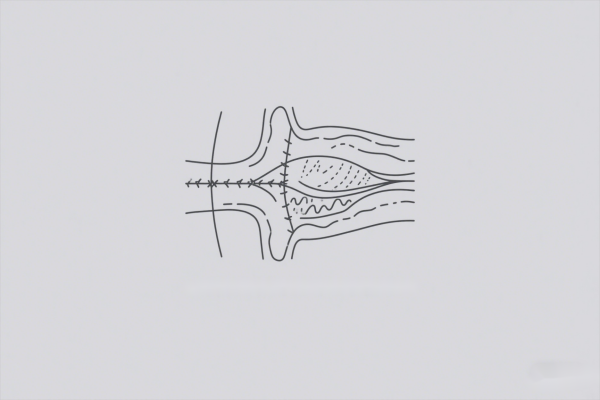
Surgical sutures are grouped by three fundamental properties, each critical to their clinical application:
The most impactful distinction is whether a suture is absorbable (breaks down naturally in the body) or non-absorbable (remains permanently or requires removal).
• Non-Absorbable Sutures: Historically the standard, these are made from materials like nylon, polyester, polypropylene,etc. They retain tensile strength indefinitely, making them ideal for permanent tissue fixation (e.g., ligament repair, sternal closure) or situations where long-term support is needed. However, they require a second procedure for removal (when used on external tissues) and carry risks of foreign body reaction, infection, or tissue irritation over time.
• Absorbable Sutures: Designed to degrade via hydrolysis (a chemical reaction with bodily fluids) into non-toxic byproducts (typically water and carbon dioxide) that the body eliminates naturally. They eliminate the need for suture removal, reduce infection risk, and minimize tissue trauma—aligning with the body’s natural healing timeline. Today, they are the gold standard for most soft tissue closures, from general surgery and gynecology to plastic surgery and pediatrics.
Suture materials fall into two broad categories, each with unique characteristics:
• Natural Sutures: Derived from animal or plant sources (e.g., catgut from sheep intestines, silk from silkworms). While biocompatible, natural sutures have limitations: inconsistent absorption rates, higher risk of allergic reactions, and susceptibility to bacterial colonization. Their use has declined significantly with the rise of synthetic alternatives.
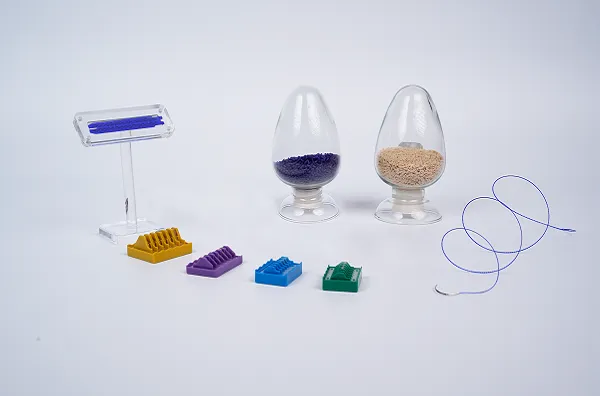
• Synthetic Sutures: Man-made polymers engineered for precise performance. They offer uniform strength, predictable absorption, and low tissue reactivity. The most advanced synthetic absorbable materials include Poly-p-dioxanone (PPDO), polydioxanone (PDO) poliglecaprone (PGCL), and polyglycolic acid (PGA)—each tailored to specific healing timelines and tissue needs.
A suture’s structure directly impacts its performance in tissue:
• Monofilament: A single, smooth strand. Advantages include minimal tissue drag (reducing trauma), lower infection risk (no crevices for bacteria to hide), and excellent glide through delicate tissues. Ideal for plastic surgery, microsurgery, and subcuticular closures.
• Braided: Manufactured by multiple strands. Offers superior knot security and flexibility but has a textured surface that can irritate tissue and trap bacteria—requiring careful handling to minimize complications.
• Barbed Sutures: A revolutionary design with tiny, backward-facing barbs along the suture length. These barbs anchor the suture in tissue, eliminating the need for knots. Benefits include faster closure time, uniform tension distribution, and reduced risk of ischemia (tissue death) from tight knots. Used widely in gynecology, breast reconstruction, and laparoscopic procedures.
• Specialized Geometries (e.g., Fishbone): Advanced designs that enhance tissue anchoring for high-tension closures. The fishbone pattern, for example, increases surface area contact with tissue, providing superior resistance to slippage—critical for orthopedic repairs, abdominal hernias, and other high-stress applications.
Absorbable sutures rely on hydrolysis—the breakdown of polymer chains when exposed to bodily fluids (water, enzymes). The rate of absorption is engineered to match the healing timeline of the tissue being closed:
• Rapidly Absorbable: Break down in 2-4 weeks, for example fast-absorbing PGA, suitable for superficial wounds or mucosal tissues.
• Moderately Absorbable: Retain strength for 2-4 weeks and fully absorb in 3-6 months (e.g., PGCL), ideal for soft tissue closures like skin, fascia, or gastrointestinal tract.
• Slowly Absorbable: Maintain strength for 4-8 weeks and absorb in 6-12 months, for example PDO and PPDO, perfect for high-tension tissues (e.g., tendons, ligaments) or surgeries where prolonged support is needed.
The key advantage of synthetic absorbable sutures is their predictability. Unlike natural sutures, which can be affected by patient factors (e.g., infection, metabolic rate), synthetic polymers degrade at a consistent rate—ensuring reliable support during the critical healing phase.
There are four critical factors: tissue type, wound tension, healing time, and cosmetic goals.
1. Tissue Type: Delicate tissues, such as facial skin and ophthalmic structures, require fine, atraumatic sutures. Tough tissues, for example tendons, need stronger, slower-absorbing sutures.
2. Wound Tension: High-tension wounds,such as hernias and orthopedic repairs, benefit from barbed or fishbone sutures, which distribute tension evenly and resist slippage. Low-tension wounds, for example superficial lacerations,can use standard monofilament sutures.
3. Healing Time: Tissues with slow healing (e.g., tendons, ligaments) require sutures that retain strength longer (e.g., PPDO). Fast-healing tissues (e.g., mucosal membranes) can use rapidly absorbable sutures.
4. Cosmetic Goals: For visible areas (e.g., face, neck), monofilament sutures are preferred for their smooth passage and minimal scarring. Barbed sutures also reduce scarring by eliminating knot-related tissue distortion.
A suture is only as effective as the needle it’s attached to. Surgical needles are designed to match suture material, tissue type, and surgical approach:
• Taper Point: Rounds and stretches tissue (no cutting), ideal for soft tissues like liver, kidney, or brain.
• Reverse Cutting: Has a sharp edge on the inner curve, minimizing tissue trauma while providing strong penetration—used for skin, fascia, and muscle.
• Diamond Point: Ultra-sharp for piercing tough tissues (e.g., cartilage, thick skin).
• Blunt Point: Designed to push through tissue without cutting, reducing the risk of vessel or nerve damage—used in pediatric surgery or fragile tissues.
Needle size and curvature (e.g., 1/4 circle, 3/8 circle, straight) also vary by procedure: laparoscopic surgeries, for example, use long, curved needles to reach deep tissues through small incisions.
The shift toward absorbable sutures is driven by three unassailable trends in healthcare:
1. Minimally Invasive Surgery (MIS): As MIS becomes standard (e.g., laparoscopic, robotic surgery), absorbable sutures eliminate the need for additional incisions to remove non-absorbable sutures—reducing patient discomfort and recovery time.
2. Patient-Centric Care: Absorbable sutures reduce postoperative visits (for suture removal), lower healthcare costs, and improve patient satisfaction — key priorities for modern healthcare systems.
3. Advancements in Polymer Science: New synthetic materials (like PPDO) continue to improve, offering better strength, biocompatibility, and absorption profiles. Specialized designs (barbed, fishbone) address unmet needs in high-tension and complex closures.
This trend is not just a "fad"— it’s a reflection of how medical technology evolves to align with the body’s natural processes. As research continues, absorbable sutures will become even more tailored to specific tissues and procedures, further solidifying their role as the future of wound closure.
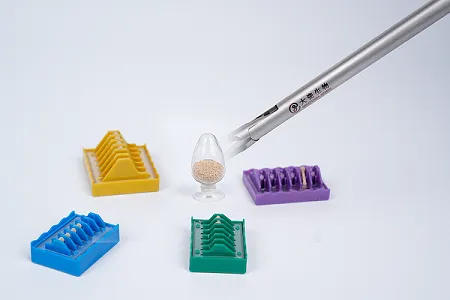
As a new player in the medical device industry, our mission is rooted in a simple belief: every surgeon and patient deserves access to high-quality, reliable sutures that support optimal healing. To achieve this, we’ve invested in vertical integration—a rare capability that allows us to control every step of production, from raw polymer synthesis to final suture assembly.
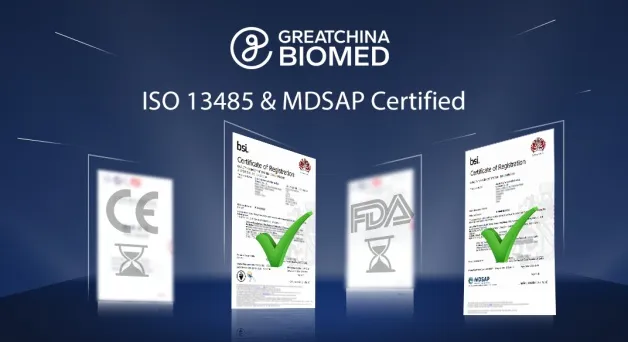
This end-to-end approach ensures that our PPDO absorbable sutures—available in monofilament, barbed, and fishbone designs, with a full range of sizes and needle types—meet the strictest global quality standards. By manufacturing our own raw materials, we guarantee consistency in strength, absorption, and biocompatibility across every batch. It’s not just a competitive advantage; it’s a commitment to transparency and reliability—values that matter most in healthcare.
We’re proud to contribute to the absorbable suture revolution, and we’re dedicated to deepening our expertise in polymer science and clinical design. Our goal is not just to provide sutures, but to partner with healthcare professionals to solve real-world challenges—whether that’s reducing OR time, improving cosmetic outcomes, or lowering complication rates.
Surgical sutures may be small, but their impact on patient outcomes is enormous.
We invite you to explore the world of absorbable sutures and discover how they’re transforming wound closure. The future of healing is here, and we’re proud to be part of it.
Contact Our Materials Science Division
We welcome you to reach out to us about our products, questions you may have or even suggestions on how we can improve.
Bldg 13, No.3 Hanshan Road, Xuejia Town, Xinbei District, Changzhou, Jiangsu 213125, China
 Call us on:
  Email Us:
  Bldg 13, No.3 Hanshan Road, Xuejia Town, Xinbei District, Changzhou, Jiangsu 213125, China