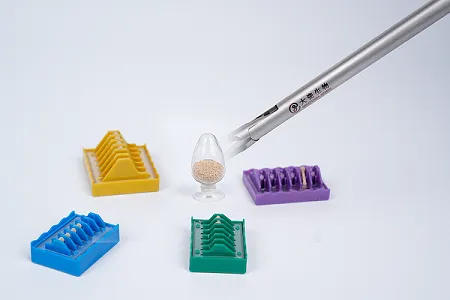
In contemporary surgical practice, the selection of energy instruments not only impacts procedural efficiency but also directly influences patient safety, postoperative recovery, and the overall treatment experience. From the most fundamental monopolar electrosurgical units to high-precision ultrasonic scalpels, and the rapidly emerging intelligent feedback bipolar electrosurgical systems (Advanced Bipolar) in recent years, each category of device represents the pursuit of surgical precision, safety, and efficiency across different eras.This article will delve into the working principles of these three mainstream electrosurgical tools, with a particular focus on the clinical advantages of Advanced Bipolar (also known as Bipolar Tissue Sealing or Bipolar Cutting Electrode). This analysis aims to help medical practitioners understand why it is increasingly becoming the preferred energy platform in oncological surgery, gynecology, general surgery, and even minimally invasive laparoscopic procedures.
The monopolar electrosurgical unit was one of the earliest electrosurgical devices widely adopted in clinical practice. Its operation relies on a complete electrical circuit: high-frequency current is generated by the electrosurgical generator, enters the patient's body through the active electrode (the surgical blade), and returns to the generator via a passive electrode (patient electrode) attached to the patient's body. This design causes the current path to traverse the entire body, posing a risk of non-targeted thermal damage during procedures.
Core Features:
Combines cutting and coagulation functions, suitable for various tissue types;
Power requires precise adjustment, typically not exceeding 40 watts for electrosurgical cutting/coagulation; adjustable up to 100 watts for specialized areas like the liver;
Requires skilled operation: Maintain a slight distance between the electrosurgical knife and tissue to generate sparks, rather than pressing it into tissue; Use with caution in patients with thick subcutaneous fat to avoid liquefactive necrosis;
Clear contraindications: Avoid direct coagulation of uterine/ovarian vessels to prevent massive hemorrhage and adjacent organ injury.
Despite the low cost and widespread adoption of monopolar electrosurgical units, their drawbacks—including extensive thermal diffusion and uncontrollable damage to surrounding tissues—become increasingly apparent in complex or delicate procedures, driving clinical adoption toward safer energy platforms.
Ultrasonic scalpels convert electrical energy into high-frequency mechanical vibrations (55,000 Hz) via piezoelectric transducers, generating longitudinal amplitudes of 50–100 micrometers at the blade tip. This mechanical energy acts on tissue, generating friction heat that vaporizes intracellular water and breaks protein hydrogen bonds, achieving simultaneous coagulation and cutting.
Clinical Advantages:
Minimal thermal damage: Lateral heat conduction limited to 1–2 mm, with probe temperatures below 80°C;
No electrical current passes through the body, completely avoiding electrophysiological interference—particularly suitable for patients with cardiac pacemakers;
Minimal smoke and eschar production ensure clear surgical fields and reduced procedure duration;
Complies with tumor-free principles, demonstrating superior performance in tumor dissection and lymph node clearance.
However, ultrasonic scalpels also have limitations: slower cutting speed, limited ability to seal large vessels (typically ≤5 mm), and prone to tip wear with higher costs. Therefore, when rapid processing of highly vascular ligaments or mesentery is required, clinicians often seek more efficient alternatives—this is precisely where Advanced Bipolar excels.
If monopolar electrosurgical units are like "casting a wide net" and ultrasonic scalpels are like "meticulous carving," then Advanced Bipolar (intelligent feedback bipolar electrosurgical system) embodies the ultimate synthesis of "precision + efficiency + safety." It is not merely an upgrade of traditional bipolar coagulation but a closed-loop system integrating real-time impedance monitoring, intelligent energy regulation, mechanical pressure feedback, and integrated cutting functionality.
In-Depth Analysis of Working Principle
The core of Advanced Bipolar lies in its bipolar electrode jaws. Current flows exclusively through tissue between the two electrodes, forming a localized circuit that bypasses the rest of the patient's body entirely. This fundamentally eliminates the risk of distal tissue damage inherent in monopolar electrosurgical instruments. Crucially, the system's built-in intelligent feedback algorithm continuously monitors tissue impedance changes:
When tissue dehydrates and collagen melts, impedance rises;
Upon reaching the optimal closure point (where blood vessel walls fuse completely to form a transparent seal), the main unit automatically terminates energy output and emits an audible alert;
Following this, the surgeon can trigger the built-in blade with a single button press to achieve a clean cut on the already sealed tissue.
This process establishes a standardized "seal first, cut later" workflow, significantly enhancing reliability.
Clinical Core Value: Why is Advanced Bipolar Changing Surgical Paradigms?
Reliable Closure of Large-Diameter Vessels
Advanced Bipolar reliably seals vessels up to 7 mm in diameter (including uterine arteries, inferior mesenteric artery branches, etc.). The sealed tissue can withstand pressures exceeding three times normal systolic blood pressure, significantly reducing intraoperative and postoperative bleeding risks. Compared to traditional bipolar coagulation, which can only handle vessels <2 mm, this represents a qualitative leap.
Enhanced Efficiency Without Excessive Dissection
When managing complex vascular structures like the pelvic funicular ligaments or ovarian suspensory ligaments, traditional methods require meticulous dissection and ligation of individual vessels—a time-consuming process prone to ureteral injury. Bipolar Tissue Sealing technology enables direct clamping of entire vascular bundles without complete dissection, drastically reducing procedure time. This is particularly advantageous in complex scenarios such as ovarian cancer debulking or hysterectomy.
Minimal Thermal Damage, Protecting Critical Structures
Energy is highly concentrated between the electrodes, with thermal diffusion limited to just 1.5–2 mm. This minimizes impact on adjacent structures like the ureter, nerves, and bowel. This feature is crucial during deep pelvic procedures.
No carbonization or foreign body residue, promoting healing
Advanced Bipolar uses controlled thermal energy to denature and fuse collagen without producing eschar or carbonized debris. The closure zone forms a homogeneous, transparent structure requiring no reinforcement with sutures or titanium clips. This not only reduces the risk of foreign body-related infections (FBRIs) but also facilitates natural tissue repair post-surgery.
Intuitive operation with a short learning curve
Unlike ultrasonic scalpels requiring multiple parameter adjustments (power, tension, pressure), the Bipolar Cutting Electrode operates similarly to traditional instruments: grasp → press foot pedal → hear confirmation tone → advance blade to cut. Most surgeons master its use within 1–2 procedures.
Wide compatibility for open and laparoscopic surgery
Specialized slender Advanced Bipolar instruments designed for laparoscopy are now available. When paired with high-definition imaging systems, they enable precise coagulation and cutting in confined spaces, making them versatile energy tools for minimally invasive surgery.
Examples of typical applications
Gynecology: Managing uterine arteries/veins and sacral ligaments during total hysterectomy; sealing mesenteric vessels in ovarian cancer surgery.
General Surgery: Diverting mesenteric vessels during colorectal cancer radical resection; managing splenic hilum vessels during splenectomy;
Urology: Controlling renal parenchymal bleeding during partial nephrectomy;
Thoracic Surgery: Handling bronchovascular bundles at the pulmonary hilum during lobectomy.
In these high-risk procedures with significant bleeding potential, Advanced Bipolar's triple capability—clamping, reliable hemostasis, and instant cutting—significantly reduces conversion rates and transfusion requirements.
Characteristics | Monopolar Electrosurgical Unit | Ultrasonic Scalpel | Advanced Bipolar (Intelligent Feedback Bipolar Electrosurgical System) |
Energy Form | High-Frequency Current (Mono-Polar Circuit) | Mechanical Vibration (Ultrasound) | High-Frequency Current (Bipolar Local Loop + Intelligent Feedback) |
Cutting Capacity | Strong | Moderate | Strong (integrated blade) |
Coagulation Capability | Moderate (power-dependent) | Weak–Moderate (≤5 mm) | Very strong (≤7 mm, reliable closure) |
Thermal Damage Range | Large (>5 mm) | Small (1–2 mm) | Minimal (1.5–2 mm) |
Penetrates the body | Yes | No | No |
Foreign body residue | None | None | None |
Operational complexity | Low | High | Medium |
Cost | Low | High | Medium-high |
Recommended Strategy:
Superficial, minimally vascular areas: Monopolar electrosurgical units remain cost-effective;
For delicate anatomy near nerves/organs: Ultrasonic scalpel is preferred;
For managing large vessels, complex tissue bundles, and balancing efficiency with safety: Advanced Bipolar represents the current optimal solution.
Advances in medicine are never about replacing one technology with another, but rather about continuous optimization based on clinical pain points.The emergence of the Advanced Bipolar System does not aim to replace monopolar electrosurgical units or ultrasonic scalpels, but rather fills a critical gap between them. Its Bipolar Tissue Sealing technology unifies "reliable closure of large vessels" with "minimally invasive, safe operation," while the Bipolar Cutting Electrode design enables seamless transition between cutting and hemostasis.
For surgeons, mastering diverse energy tools is akin to wielding varied weapons; for patients, each technological leap translates to less trauma, faster recovery, and enhanced quality of life. In the modern surgical vision of "zero complications, zero foreign bodies, zero reoperations," Advanced Bipolar is emerging as an indispensable pillar of strength.
Contact Our Materials Science Division
We welcome you to reach out to us about our products, questions you may have or even suggestions on how we can improve.
Bldg 13, No.3 Hanshan Road, Xuejia Town, Xinbei District, Changzhou, Jiangsu 213125, China
 Call us on:
  Email Us:
  Bldg 13, No.3 Hanshan Road, Xuejia Town, Xinbei District, Changzhou, Jiangsu 213125, China