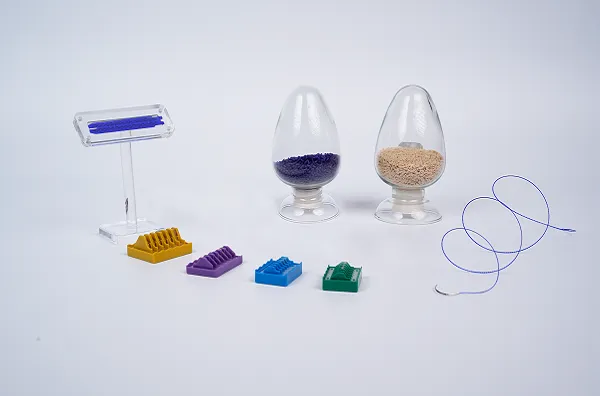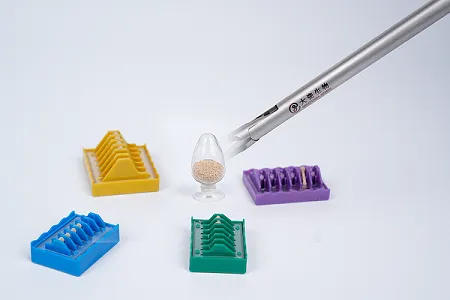
A ligation clip may appear simple, but achieving consistent, reliable vessel occlusion across varying tissue types and anatomical conditions requires thoughtful engineering. Modern hemostasis clips are the result of rigorous design processes that balance mechanical performance, biological compatibility, and manufacturability. This article explores the engineering principles that underpin advanced clip ligation systems.
A ligation clip must provide complete vessel or ductal occlusion, maintain closure force throughout the healing period, resist dislodgment or migration, minimize tissue trauma, and enable straightforward deployment. These requirements place competing demands on material selection, geometry, and surface design. Meeting all these criteria simultaneously requires careful optimization — especially for absorbable ligating clips where the material properties change over time as degradation progresses.
Friction-based clips rely on jaw-to-jaw friction to maintain closure. While simple, they may be more susceptible to back-off in high-mobility anatomical regions or when tissue edema subsides. Positive locking mechanisms — such as the hinge-lock design used in the Greatchina Biomed system — incorporate a physical latch that engages upon full closure, providing both audible and tactile confirmation. This positive lock design is a key differentiator among surgical clips, ensuring reliable closure throughout the healing period regardless of tissue changes.
The inner jaw surface plays a critical role in preventing tissue slippage. Greatchina Biomed's clip applier delivers clips with integrated engineered ridges designed through finite element analysis to maximize grip while minimizing trauma. The polymer material is carefully selected to balance initial mechanical strength, degradation rate, biocompatibility, and processing characteristics — enabling precision molding of complex geometries while achieving complete, predictable absorption. This dual innovation in material composition and structural design sets these vascular clips apart in the market.
Each clip undergoes dimensional verification, closure force testing, locking mechanism function checks, and sterility assurance. These measures are intended to ensure consistent performance across manufacturing batches. Greatchina Biomed's quality management system operates under ISO 13485 standards, ensuring that every clip meets rigorous specifications. For technical details on the ligating clips portfolio, visit https://www.gcbiomed.com/products/absorbable-locking-ligation-system.html or www.gcbiomed.com.
Greatchina Biomed is an innovative company specializing in absorbable biomaterials and implantable medical devices. In collaboration with the Chinese Academy of Sciences, the company has built a full-chain technology platform from polymer synthesis to precision manufacturing. As one of the few Chinese enterprises with independent R&D capabilities for absorbable polymers such as PPDO and PGLT, Greatchina Biomed is dedicated to delivering safer, more reliable absorbable medical solutions. Our star product has been admitted into the National Innovation Medical Device Expedited Review Program, reflecting the technological advancement and clinical value. Our brand philosophy — "Innovation Made Real" — embodies our commitment to advancing surgical care through material science innovation. Visit: www.gcbiomed.com
Absorbable Ligation Clips in Laparoscopic Surgery: Technology and Clinical Rationale
Contact Our Materials Science Division
We welcome you to reach out to us about our products, questions you may have or even suggestions on how we can improve.
Bldg 13, No.3 Hanshan Road, Xuejia Town, Xinbei District, Changzhou, Jiangsu 213125, China
 Call us on:
  Email Us:
  Bldg 13, No.3 Hanshan Road, Xuejia Town, Xinbei District, Changzhou, Jiangsu 213125, China