Absorbable ligating clips are implantable surgical devices designed to secure vessels or tubular structures during a procedure and gradually degrade after their temporary function has been fulfilled. Unlike permanent metallic clips, absorbable polymer clips are developed to reduce the amount of long-term foreign material remaining in the body. Their suitability depends on more than the material itself: clip geometry, locking performance, tissue diameter, applicator compatibility, and the intended degradation profile all need to be considered.
For medical device distributors, OEM partners, and procurement teams, evaluating an absorbable clip system requires a structured review of both the clip and its delivery instrument. This guide explains the main design and sourcing considerations, using published product information as a reference while distinguishing manufacturer specifications from general selection principles.
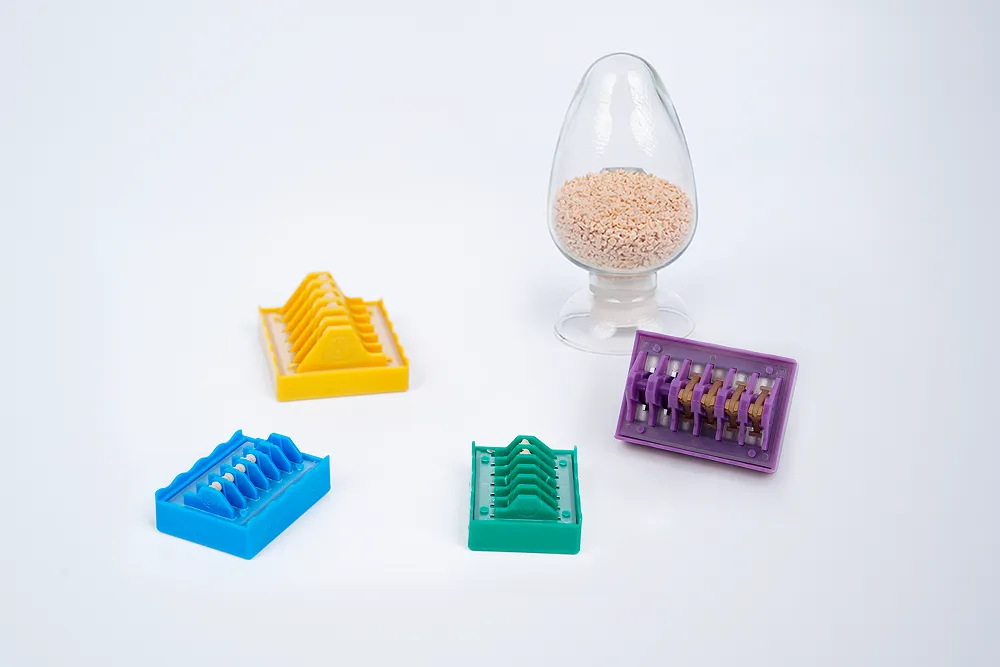
Absorbable ligating clips are mechanical closure devices made from bioresorbable polymer materials. They are designed to close a vessel or duct by applying controlled compression around the target tissue. The clip typically includes a locking feature that helps maintain closure after application.
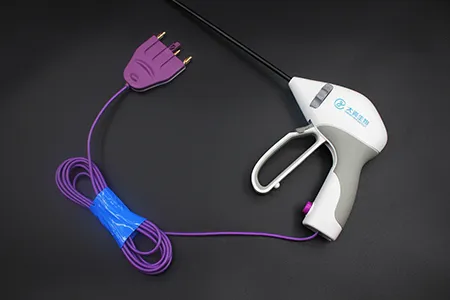
The basic system consists of two components: the implantable clip and a compatible clip applier. The clip provides the closure mechanism, while the applier supports loading, positioning, and deployment. These components must be evaluated together because a clip that fits the tissue diameter may still be unsuitable if its applier compatibility or deployment behavior is not confirmed.
Absorbable clips are not interchangeable with every permanent polymer or metal clip. Material composition, mechanical behavior, degradation characteristics, and intended use are product-specific. Buyers should therefore request the relevant Instructions for Use (IFU), technical documentation, and regulatory information for the exact model under consideration.
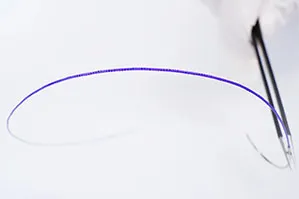
Bioresorbable polymers are selected for their ability to provide temporary mechanical support and gradually degrade in the body. Polydioxanone and other absorbable polymer systems have been investigated for implantable devices, including sutures and ligation products. Their behavior depends on polymer chemistry, molecular characteristics, processing, device geometry, and the surrounding biological environment.
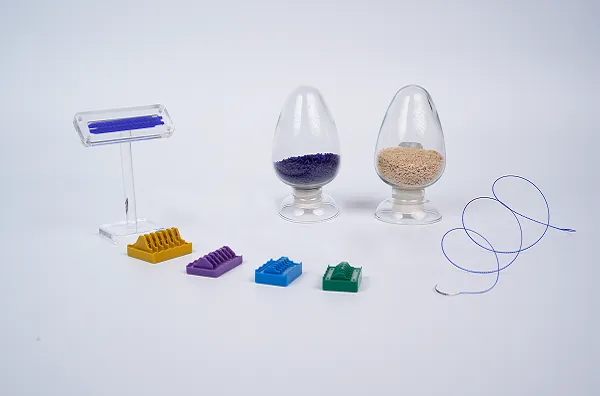
GCBiomed identifies PGLT as the material used in its absorbable ligation clip system. Its product information describes PGLT as a tunable medical-grade polymer platform. The company states that material characteristics can be adjusted through monomer ratios and synthesis processes to balance initial strength, hardness, tissue interaction, and absorption behavior.
The selection of pglt as a material platform should therefore be evaluated through the finished clip's performance data rather than the polymer name alone. Buyers should request evidence covering dimensional consistency, mechanical performance, degradation profile, biocompatibility, and sterilization compatibility.
Clip size must correspond to the diameter of the tissue structure being ligated. A clip that is too small may not close around the intended tissue correctly, while an oversized clip may not provide the intended compression or fit within the operative field.
GCBiomed's published absorbable locking ligation system specification lists four size groups and corresponding tubular tissue diameter ranges.
| Clip size group | Published clip codes | Tubular tissue diameter | Compatible applier code | Base color |
|---|---|---|---|---|
| XS | GC-BHJ-XS series | 0.4–2.8 mm | GC-SJQ-XS | Blue |
| S | GC-BHJ-S series | 0.5–3.3 mm | GC-SJQ-S | Green |
| M | GC-BHJ-M series | 2.0–5.1 mm | GC-SJQ-M | Purple |
| L | GC-BHJ-L series | 4.0–7.6 mm | GC-SJQ-L | Golden |
The product page lists multiple clip codes within each group, including XS2–XS5, S2–S6, M2–M6, and L2–L6. The published table also contains a repeated XS2 entry; buyers should confirm the latest controlled specification sheet before using individual model codes in a purchase order.
The diameter ranges above are manufacturer-published specifications. They should not be interpreted as a substitute for the IFU or as a clinical recommendation for a particular vessel or procedure.
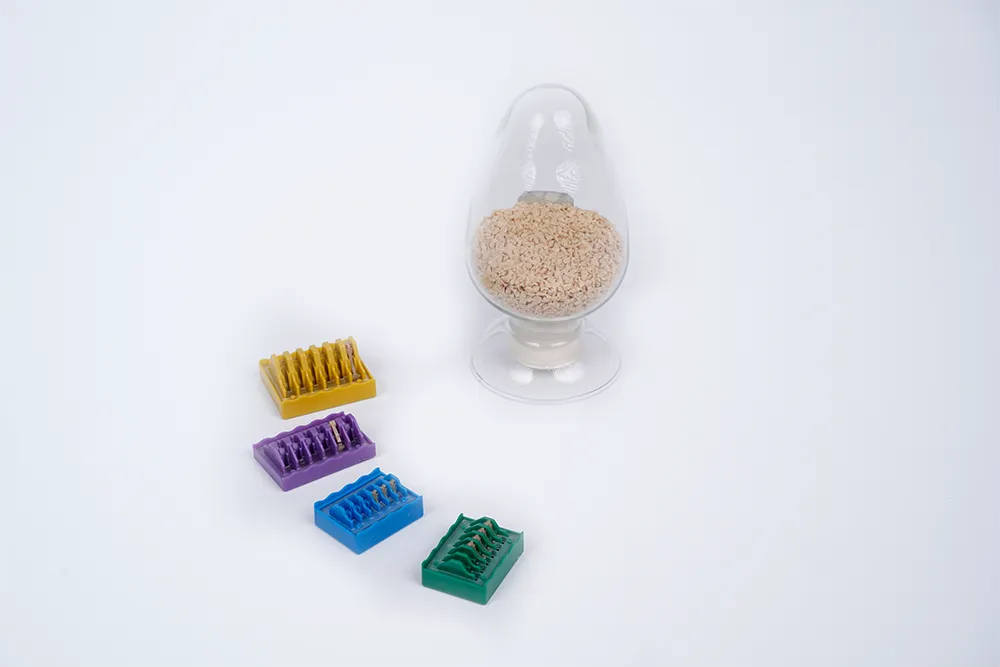
A ligating clip system is only as reliable as the interaction between its implant and delivery instrument. The clip must load correctly, remain secure during transfer, open and close as intended, and engage its locking feature under the conditions specified by the manufacturer.
GCBiomed lists compatible applier codes for the XS, S, M, and L clip groups. This provides a starting point for procurement, but buyers should still confirm the exact combination of clip code and applier model.
When evaluating ligating clips suppliers, request documentation on loading steps, jaw alignment, closure feedback, compatibility limits, and any reusable-instrument cleaning or maintenance requirements. For OEM or distribution projects, packaging configuration, labeling, traceability, and product change-control arrangements are also important.
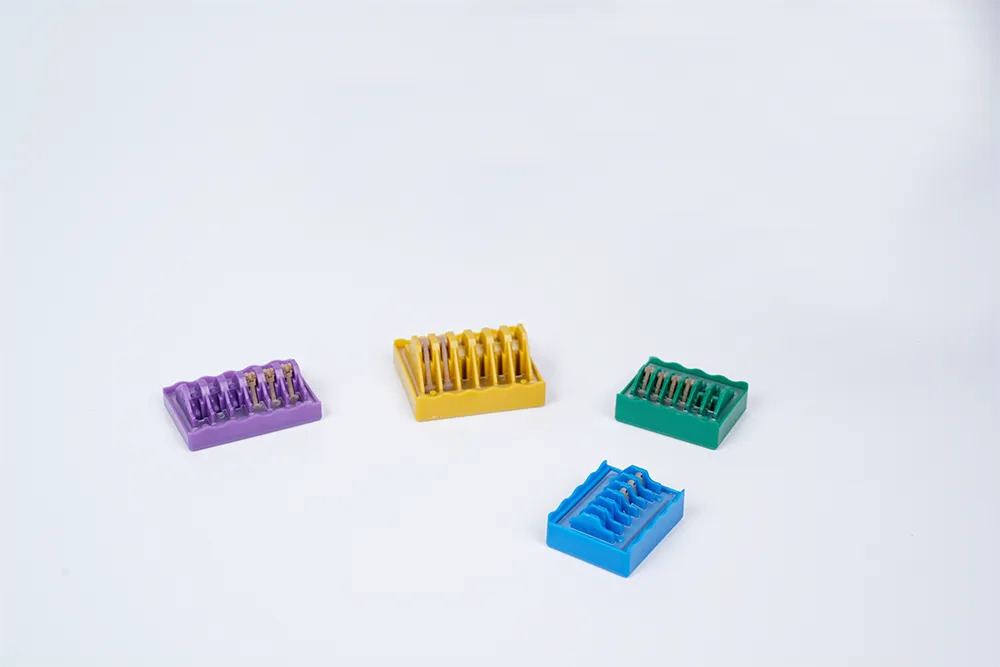
A technical comparison should cover more than the clip's nominal size. The following table summarizes the main points that procurement, quality, and engineering teams should review.
| Evaluation area | Information to request | Why it matters |
|---|---|---|
| Material | Polymer identity and composition | Establishes the material basis for performance and biological evaluation |
| Size range | Tissue diameter range and model codes | Helps match the device to the intended application |
| Locking design | Locking geometry and closure mechanism | Supports evaluation of closure consistency |
| Mechanical performance | Relevant closure, retention, and strength test data | Provides evidence for the intended function |
| Degradation | Strength retention and absorption profile | Shows how the device behaves over the required support period |
| Applier compatibility | Compatible applier model and instructions | Reduces system mismatch risk |
| Sterilization | Validated sterilization method and packaging information | Supports product quality and shelf-life evaluation |
| Regulatory documentation | Applicable registrations, certificates, and IFU | Supports market-specific compliance review |
The FDA's surgical device guidance and recognized biocompatibility framework provide useful context for understanding how device materials and finished-device performance should be documented. The specific regulatory pathway for a ligating clip must be confirmed for its classification and target market.
The main distinction is the long-term fate of the implant material. Non-absorbable clips are designed to remain in the body, whereas absorbable clips are designed to degrade over time. This difference can influence imaging considerations, long-term implant burden, and the way a device is selected for a particular procedure.
However, absorbability alone does not prove that one device is safer or more suitable than another. The device must retain sufficient functional performance during the required healing period. The closure mechanism, clip size, tissue conditions, and operator technique remain important.
For this reason, the evaluation of Absorbable ligating clips should include product-specific mechanical and degradation evidence, rather than relying only on broad material claims.
A qualified medical device manufacturer should be able to provide consistent product specifications, controlled documentation, and a clear communication process for technical questions. For international buyers, it is also important to understand the manufacturer's quality management system, production controls, complaint handling, and regulatory support.
Before entering a supply agreement, request the following:
Current product catalogue and controlled technical specifications
IFU and model-specific compatibility information
Material and biocompatibility documentation
Sterilization validation and packaging information
Shelf-life and transport-condition information
Applicable regulatory registrations for the target market
Quality-system documentation and batch traceability
OEM/ODM scope, labeling options, and change-control procedures
A supplier's ability to answer these questions clearly is an important indicator of its readiness for a long-term B2B relationship.
GCBiomed identifies PGLT as the material used in its absorbable locking ligation system. Buyers should request the current technical file for detailed material composition and finished-device performance information.
The published specification lists 0.4–2.8 mm for XS, 0.5–3.3 mm for S, 2.0–5.1 mm for M, and 4.0–7.6 mm for L. Always confirm the current IFU and model-specific limits before selection.
The published product table assigns different applier codes to XS, S, M, and L groups. Buyers should not assume interchangeability and should confirm the exact compatible clip-applier combination.
The manufacturer's product information states complete absorption within 12 months. The exact degradation behavior should be reviewed in the product's controlled technical documentation and supporting test data.
At minimum, request the current specification, IFU, material information, sterilization and packaging documentation, applicable regulatory documents, and quality-system information relevant to the target market.
A Clinical Evaluation of Absorbable Polydioxanone Ligating Clips in Abdominal and Pelvic Operations
Absorbable Polymeric Surgical Clips for Appendicular Stump Closure: A Randomized Control Trial
Initial Experience with an Absorbable Laparoscopic Ligation Clip
Contact Our Materials Science Division
We welcome you to reach out to us about our products, questions you may have or even suggestions on how we can improve.
Bldg 13, No.3 Hanshan Road, Xuejia Town, Xinbei District, Changzhou, Jiangsu 213125, China
 Call us on:
 Email Us:
 Bldg 13, No.3 Hanshan Road, Xuejia Town, Xinbei District, Changzhou, Jiangsu 213125, China