Absorbable surgical sutures are designed to provide temporary tissue support and gradually degrade after the healing process has progressed. Their performance is influenced by polymer chemistry, filament structure, suture size, needle design, tensile strength retention, and absorption behavior. Choosing a suitable product therefore requires more than comparing the USP size or the material name.
For medical device distributors, OEM partners, and procurement teams, the key is to understand how the suture's physical design and material properties relate to the intended application. This guide reviews PPDO-based absorbable sutures, explains the differences between monofilament, barbed, and fishbone configurations, and outlines the technical information buyers should request from a manufacturer.
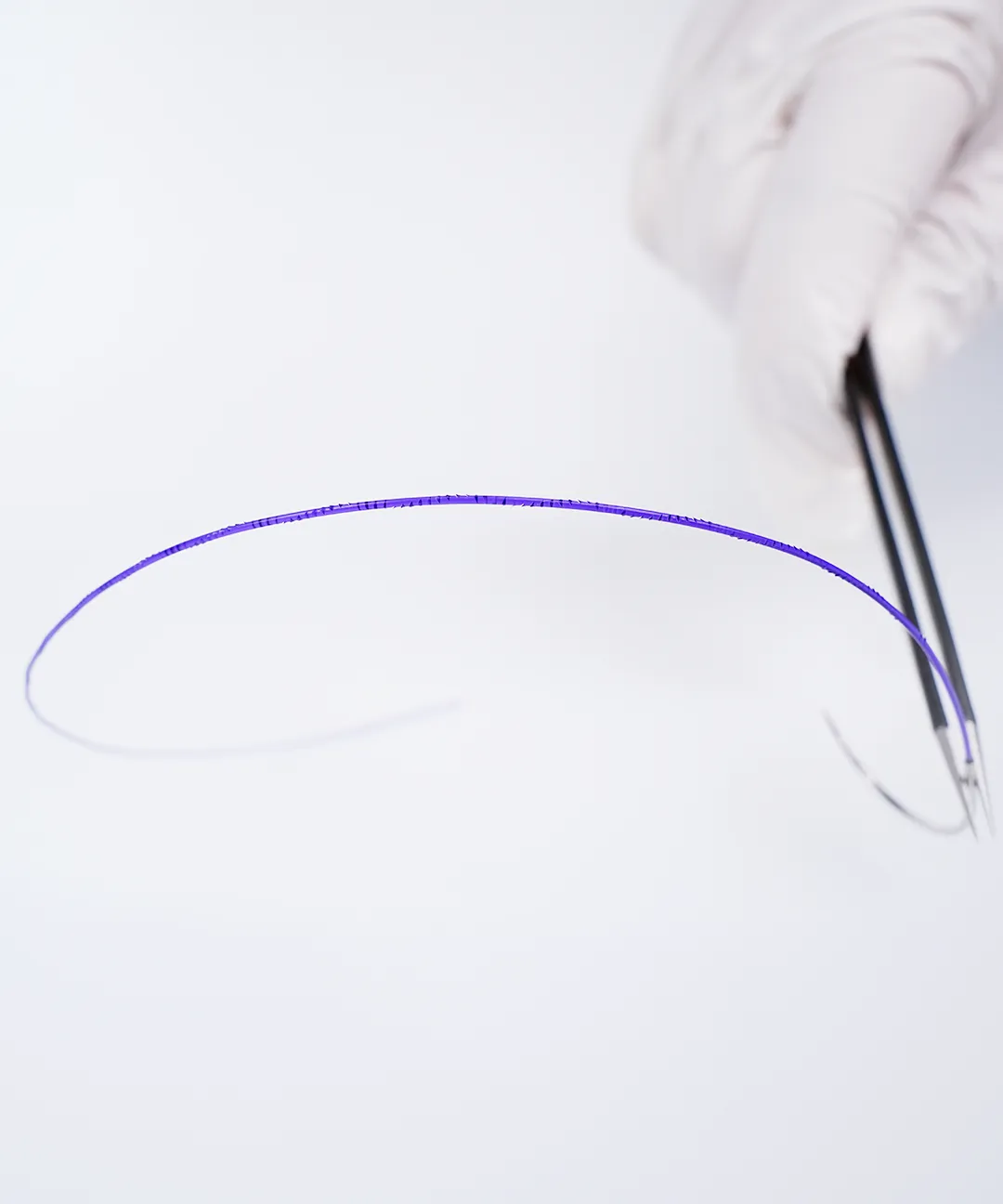
Absorbable surgical sutures are sterile wound-closure materials designed to provide mechanical support for a defined period before being broken down and absorbed by the body. Synthetic absorbable sutures commonly degrade through hydrolysis, although the exact process and time profile depend on the polymer and finished-device design.
A suture must maintain adequate strength during the period when tissue needs support. Complete absorption is a separate endpoint and should not be confused with the time at which the suture loses most of its tensile strength.
The FDA's guidance for surgical sutures emphasizes that product documentation should describe material composition, suture size, absorption behavior, tensile strength changes over time, and the expected completion of absorption. These are useful reference points when comparing manufacturers and reviewing technical files.
PPDO, or polydioxanone, is a synthetic absorbable polymer used in medical devices such as surgical sutures. It is valued in applications where temporary mechanical support is required over an extended healing period.
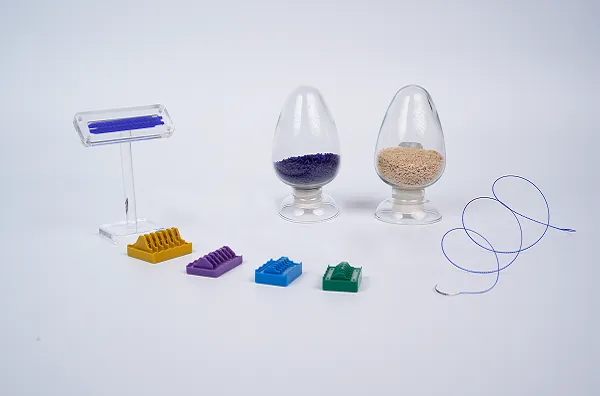
GCBiomed describes its PPDO as a medical-grade, high-purity polymer supplied in granulate form for manufacturing absorbable medical devices. The company identifies tensile strength retention, flexibility, and low memory as important material characteristics. Its product information also lists surgical sutures, tissue-engineering scaffolds, and patient-specific implants among potential applications.
When evaluating ppdo as a raw material, buyers should review the polymer's identity, lot consistency, processing characteristics, and the performance of the finished suture. Raw-material specifications alone cannot establish the mechanical performance or clinical suitability of a finished sterile device.
Suture structure affects handling, tissue passage, knot requirements, and the way tension is distributed along a closure line.
| Suture design | Structure | Main design characteristic | Key evaluation point |
|---|---|---|---|
| Monofilament | Single continuous strand | Smooth, single-filament construction | Flexibility, memory, tissue passage, and knot security |
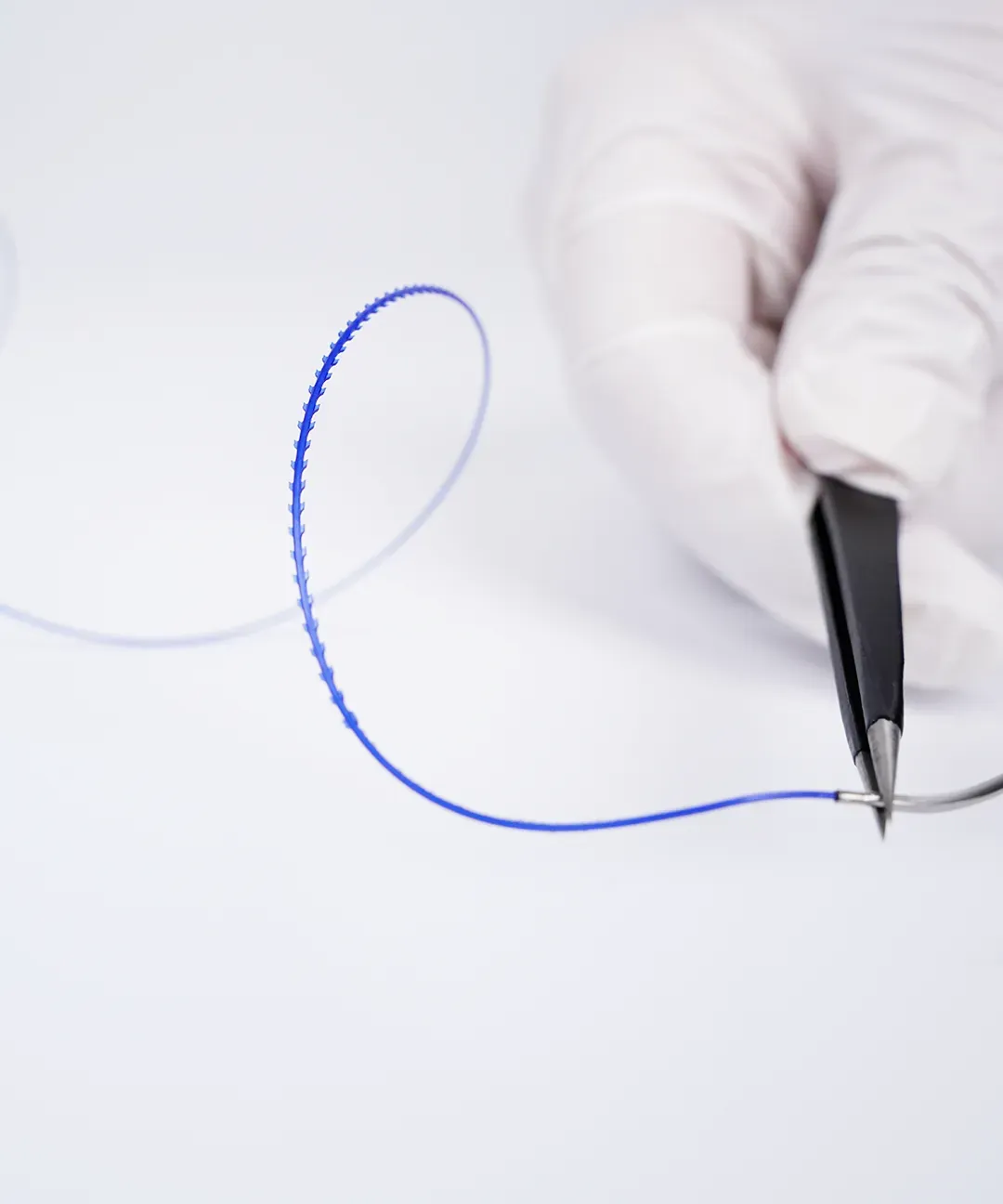
| Barbed | Strand with directional barbs | Anchoring features help resist backward movement | Barb geometry, direction, and tissue engagement |
| Fishbone | Knotless structure with repeated anchoring features | Designed for distributed fixation along the suture line | Anchor consistency, tensile integrity, and deployment behavior |
GCBiomed's absorbable suture range includes monofilament, barbed, and fishbone configurations. The correct choice depends on the intended tissue, closure technique, handling preferences, and the evidence available for the specific product.
Barbed and fishbone designs should not be treated as identical. Their anchoring geometry and deployment behavior may differ, so buyers should review product-specific instructions and training requirements.
Suture size is commonly expressed using the USP system. The size affects strand diameter and is one of the factors that influence tensile properties and handling. However, size alone does not determine whether a suture is suitable for a particular tissue or procedure.
GCBiomed's absorbable surgical suture overview publishes the following size ranges by structure:
| Suture design | Published size options |
|---|---|
| Fishbone | 3-0, 2-0, 0, 1 |
| Barbed | 4-0, 3-0, 2-0, 0, 1, 2 |
| Monofilament | 7-0, 6-0, 5-0, 4-0, 3-0, 2-0, 0, 1, 2 |
These are the size options shown on the current product overview page. Individual product pages may have additional configuration details, and availability should be confirmed for the exact model and needle combination.
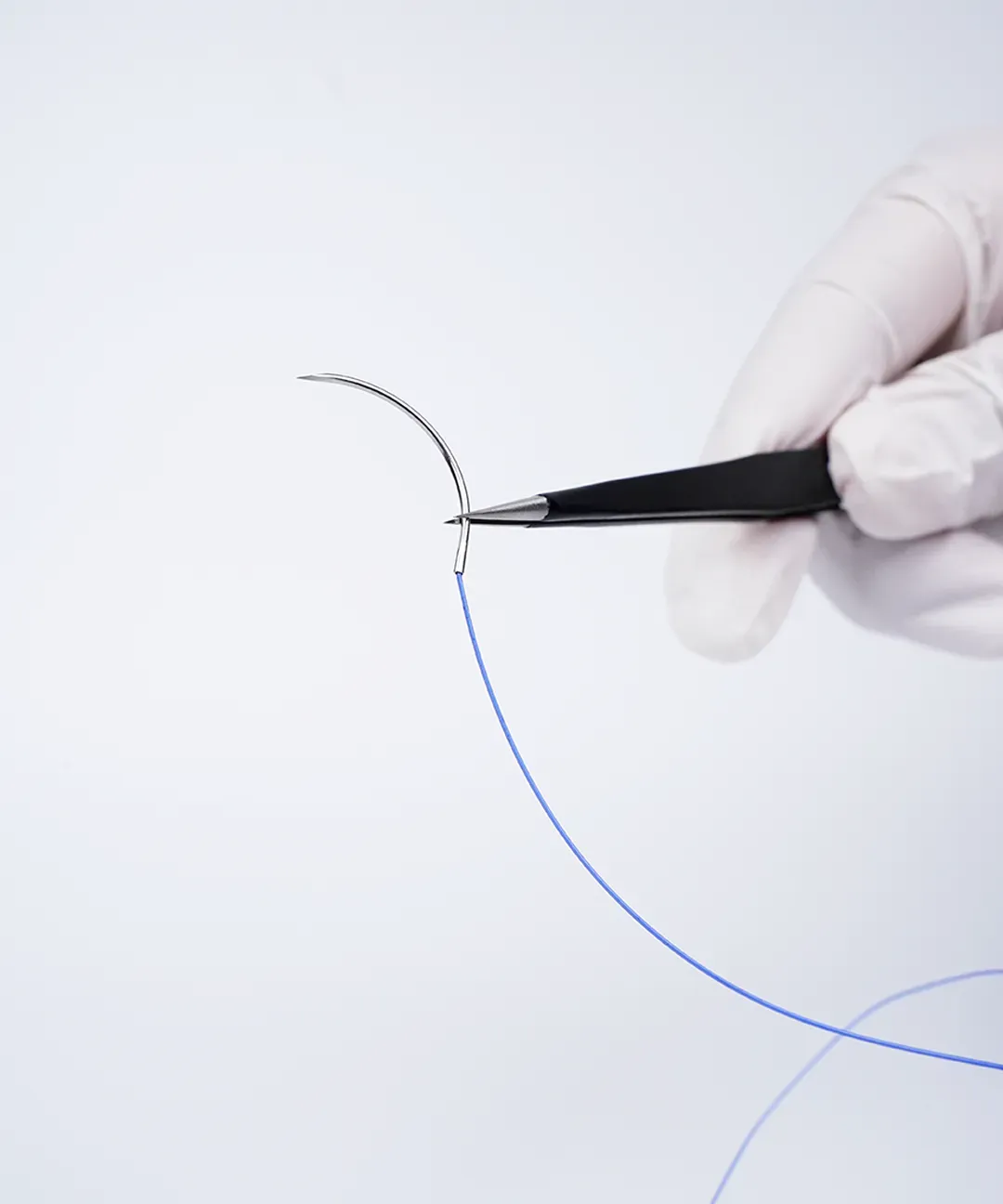
The needle should also be selected according to the tissue and surgical approach. The manufacturer lists cutting or reverse-cutting needles for skin, taper-point needles for soft tissue such as bowel and vessels, and half-circle needles for laparoscopic applications. These are product-selection categories, not a substitute for the relevant IFU or clinical judgment.
Tensile strength retention describes how much of the original suture strength remains over time. It is particularly important because tissue healing does not happen instantly. A suture may gradually lose strength before the material has been completely absorbed.
Published studies on polydioxanone sutures show that tensile strength and complete mass absorption follow different timelines. The exact values vary by product, suture size, testing method, and biological environment. For this reason, a buyer should not apply a published result from one commercial product directly to another PPDO suture.
The manufacturer's technical file should ideally include a strength-retention profile for the finished sterilized suture, along with test conditions and the relevant size range. The FDA guidance also recommends demonstrating a resorption profile that is consistent with the intended use.
A medical device manufacturer should be able to explain both the raw material and the finished suture configuration. When comparing absorbable sutures material, buyers should ask whether the supplier can provide material traceability, polymer specifications, and performance evidence for the finished product.
A practical technical checklist includes:
Polymer identity and composition
USP size and diameter information
Monofilament, barbed, or fishbone structure
Needle type, curvature, and attachment information
Tensile strength and strength-retention data
Absorption profile and test method
Sterilization method and validation
Packaging configuration and shelf-life data
Biocompatibility documentation
Applicable regulatory registrations and quality-system documents
For OEM or distribution projects, also confirm private-label options, labeling requirements, language versions, minimum order quantities, change-control procedures, and complaint-handling arrangements.
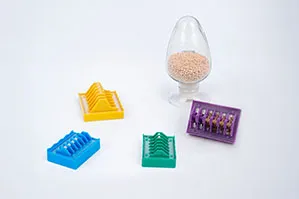
PPDO and PGLT are different polymer platforms and should not be assumed to have interchangeable characteristics. GCBiomed presents PPDO as a raw material for absorbable sutures and other implantable devices. Its PGLT platform is used in the development of absorbable ligation clips, connecting the material's adjustable properties with a specific finished-device application.
The pglt material page explains that its characteristics can be adjusted through monomer ratios and synthesis processes to achieve different balances of strength, hardness, tissue interaction, and absorption behavior. This is a material-development approach rather than a universal specification for every finished product.
For buyers, the important point is to match each polymer to its finished-device application and supporting test data. A polymer's general description should not be used as a substitute for the finished suture's tensile, absorption, sterilization, and biocompatibility documentation.
PPDO is polydioxanone, a synthetic absorbable polymer used in medical devices including surgical sutures. Its performance depends on the material grade, processing, suture structure, and finished-device design.
Monofilament sutures use a single continuous strand, while barbed sutures include anchoring features along the strand. Barbed designs are intended to support knotless closure, but their handling and use must follow the specific product instructions.
The published overview lists fishbone sizes from 3-0 to 1, barbed sizes from 4-0 to 2, and monofilament sizes from 7-0 to 2. Confirm the exact size and configuration on the individual product specification.
No. Tensile strength can decrease before the material is completely absorbed. Buyers should review strength-retention data and absorption data as separate performance measures.
Request the current specification, IFU, material composition, tensile-strength profile, absorption profile, needle and size configuration, sterilization validation, packaging information, and regulatory documents applicable to the destination market.
Surgical Sutures – Class II Special Controls Guidance Document
Advances in Suture Material for Obstetric and Gynecologic Surgery
Polydioxanone Implants: A Systematic Review on Safety and Performance in Patients
Contact Our Materials Science Division
We welcome you to reach out to us about our products, questions you may have or even suggestions on how we can improve.
Bldg 13, No.3 Hanshan Road, Xuejia Town, Xinbei District, Changzhou, Jiangsu 213125, China
 Call us on:
 Email Us:
 Bldg 13, No.3 Hanshan Road, Xuejia Town, Xinbei District, Changzhou, Jiangsu 213125, China