Wound closure is one of the oldest and most fundamental steps in surgery. The choice between an absorbable and a non-absorbable suture is rarely straightforward — it depends on tissue type, healing kinetics, infection risk, and patient-specific factors. This guide reviews the clinically relevant differences to support informed decision-making, with particular attention to the growing role of advanced absorbable suture materials in modern surgical practice.
A suture's primary job is to approximate tissue under tension until the wound gains sufficient intrinsic strength. Absorbable sutures are engineered to maintain tensile strength during the critical healing phase, then gradually lose it as the material undergoes hydrolysis. Non-absorbable sutures, by contrast, maintain their tensile strength indefinitely — which is advantageous in tissues that heal slowly or remain under chronic tension, but also means they persist as permanent foreign material. Modern monofilament suture designs aim to balance strength retention with optimal handling.
The complete absorption timeline varies by polymer composition. Fast-absorbing synthetic sutures may be fully absorbed in approximately 42 days, while polydioxanone can take 180 days or more. Modern copolymers offer increasingly predictable degradation profiles that can be tailored to specific clinical needs. Non-absorbable sutures remain in situ indefinitely. While generally well-tolerated, permanent sutures carry a low but recognized risk of chronic inflammation, sinus tract formation, or extrusion — particularly in superficial or heavily contaminated sites. The trend toward reducing permanent implant burden has driven innovation in absorbable suture material development.
Synthetic absorbable sutures, especially monofilament types, elicit a mild and transient inflammatory response that subsides as the material degrades. Braided absorbable sutures may harbor more bacteria due to their multifilament structure, although antimicrobial-coated variants aim to mitigate this concern. Non-absorbable sutures, particularly braided non-absorbable materials, have been associated with biofilm formation in certain long-term settings. The complete elimination of absorbable suture material eliminates the theoretical risk of serving as a long-term bacterial reservoir — an advantage that is particularly relevant in contaminated or infected surgical fields.
Absorbable sutures are preferred for subcutaneous and dermal closure, mucosal surfaces, pediatric patients (eliminating the need for removal), and deep-layer closure where suture removal is impractical. Non-absorbable sutures remain the choice for skin closure requiring extended wound support, tendon and ligament repair, vascular anastomoses, and areas under high tension. The expanding range of surgical suture absorbable options now includes materials with extended strength retention suitable for fascial closure that were previously the domain of non-absorbable products.
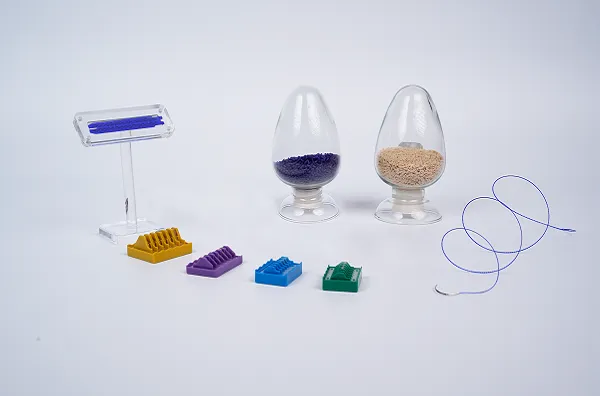
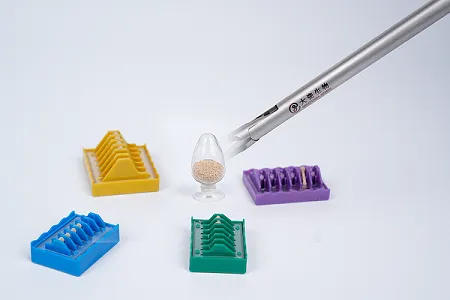
Greatchina Biomed is developing a range of absorbable surgical sutures leveraging advanced PPDO (poly-p-dioxanone) copolymer technology. The company's PPDO sutures emphasize exceptional material purity, which directly translates to superior smoothness and consistent hand feel during use. High-purity PPDO reduces tissue drag during passage, minimizes tissue trauma, and provides more predictable knot security. The uniformity of the monofilament suture ensures consistent mechanical performance across each batch, giving surgeons confidence in the reliability of every closure. For current product development status, please refer to https://www.gcbiomed.com/products/absorbable-surgical-suture/ or www.gcbiomed.com.
Greatchina Biomed is an innovative company specializing in absorbable biomaterials and implantable medical devices. In collaboration with the Chinese Academy of Sciences, the company has built a full-chain technology platform from polymer synthesis to precision manufacturing. As one of the few Chinese enterprises with independent R&D capabilities for absorbable polymers such as PPDO and PGLT, Greatchina Biomed is dedicated to delivering safer, more reliable absorbable medical solutions. Our star product has been admitted into the National Innovation Medical Device Expedited Review Program, reflecting the technological advancement and clinical value. Our brand philosophy — "Innovation Made Real" — embodies our commitment to advancing surgical care through material science innovation. Visit: www.gcbiomed.com
The Role of Absorbable Sutures in Reducing Postoperative Complications
Absorbable Surgical Sutures: A Comprehensive Guide to Wound Closure Technology
Absorbable Surgical Suture (Monofilament)
Knotless Absorbable Surgical Suture (Fishbone)
Knotless Absorbable Surgical Suture (Barbed)
Contact Our Materials Science Division
We welcome you to reach out to us about our products, questions you may have or even suggestions on how we can improve.
Bldg 13, No.3 Hanshan Road, Xuejia Town, Xinbei District, Changzhou, Jiangsu 213125, China
 Call us on:
  Email Us:
  Bldg 13, No.3 Hanshan Road, Xuejia Town, Xinbei District, Changzhou, Jiangsu 213125, China